
“How much will a website cost?” is usually the first question I’m asked, and the honest answer is that it depends on what the website needs to do. That isn’t much help when you’re trying to set a budget, though. So this guide gives you real UK figures for each way of getting a website, shows exactly what 53Marketing charges and why, and explains the running costs that catch people out after launch.
The short answer
- Build it yourself on a website builder: roughly £200 to £450 a year for most small businesses, plus your own time.
- Freelancer: from a few hundred pounds for a very basic site, rising into the thousands for anything more involved.
- Small studio or designer: typically from about £2,500 to £5,000 for a small business website.
- Online shop: usually from around £5,000 when it’s built for you, depending on the number of products and features.
- Larger agency: from around £6,000, and £10,000 or more for a bespoke build.
On top of the build, budget for running costs: a domain name, hosting, and security updates or maintenance. The figures for builders, freelancers and agencies come from two recent UK guides, listed in the sources at the end of this article. The small studio range runs from our own starting price up to GoDaddy’s figure of about £4,500 for a designer-built basic site.
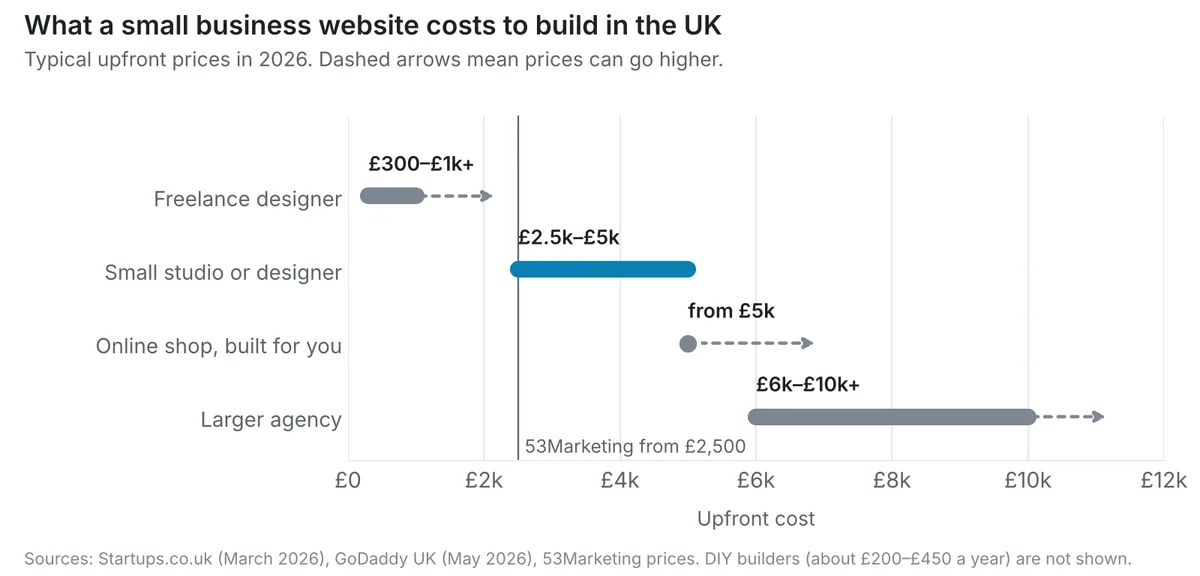
The main ways to get a website, and what each costs
| Option | Typical upfront cost | Typical ongoing cost | Best for |
|---|---|---|---|
| DIY website builder (Wix, Squarespace and similar) | None, beyond your time | Monthly plans from about £9 for an entry-level paid plan, more for online shops, plus a domain name | A simple site you’re happy to build and maintain yourself |
| Freelance web designer | About £300 to £1,000 for a basic site; more for larger or custom work | Hosting and any maintenance you arrange | A small, straightforward site on a tight budget |
| Small studio or independent designer | Around £2,500 to £5,000 for a small business site | Hosting and maintenance, often offered as a monthly package | Service businesses that want a site planned, built and supported properly |
| Larger agency | From around £6,000, and £10,000 or more for bespoke builds | Maintenance from around £600 a year for a basic site, and much more for large shops | Bigger organisations, complex or bespoke projects |
Prices vary a lot, so treat these as ranges rather than rules. The useful question is what each option includes. A cheap quote that leaves out planning, content structure, mobile layouts or a proper handover often costs more later, when the site has to be fixed or rebuilt.
What 53Marketing charges, and what’s included
Here’s a real example from a small Northern Ireland studio. These are our current starting prices, the same as on our website design page.
- Standard WordPress website: from £2,500. Around 8 pages, usually around 6 weeks from an agreed scope to launch.
- WooCommerce online shop: from around £5,000, depending on the size of the store.
- Shopify shop: quoted individually.
- Hosting and maintenance: £150 a month, covering hosting, security updates, one monthly backup and support.
A standard website covers page and navigation planning, design and build in WordPress and Elementor, layouts for mobile, tablet and desktop, adding and laying out your text and images, a contact form, SEO foundations (page structure, headings, page titles and descriptions), checks before launch, and a handover showing you how to edit the site.
Copywriting and photography aren’t included as standard. You supply the words and they’re structured and laid out for you, and either service can be added. 53Marketing isn’t VAT registered, so there’s no VAT on top of these prices. You get a written scope and quote before any work starts.
What pushes the price up
Most of the difference between a £2,500 website and a £10,000 one comes from a handful of things:
- Number of pages. Every page needs planning, content and layout. A site with separate pages for each service and area costs more than a five-page brochure site.
- Features. Booking systems, job boards, membership areas, quote calculators and integrations with other software all add time.
- Selling online. Product structure, product pages, checkout, payments, delivery rules and stock all add work. Price grows with the number of products and options.
- Content. If you can’t write your own page copy, professional copywriting is a separate cost, and it’s often worth it.
- Redesigns and moves. Replacing an existing site means reviewing what’s there, keeping what works and redirecting old addresses so you don’t lose search visibility. See our website redesign page for how that’s handled, and the free website redesign checklist to plan one.
- Bespoke design or development. A fully custom design system or custom code costs more than a well-built site on a proven platform.

Running costs after launch
The build is a one-off cost, but every website has running costs. These are the ones to plan for:
- Domain name: usually under £20 a year for a .co.uk or .com.
- Hosting: from a few pounds a month for basic shared hosting. Faster or managed hosting costs more.
- Security updates and maintenance: WordPress sites need regular updates to stay secure. You can do this yourself, or pay someone to do it. That’s what the £150 a month package covers for 53Marketing clients. Our guide to website maintenance costs compares the options.
- Plugins, apps and payment fees: some sites need paid plugins or apps. Online shops also pay card processing fees on each sale.
- Ongoing SEO or marketing: optional, and a separate service. A new website doesn’t guarantee rankings on its own. See how much SEO costs in the UK.
A worked example: a standard 53Marketing website at £2,500, with hosting and maintenance at £150 a month, costs £4,300 in the first year (£2,500 plus £1,800), plus your domain name. After that, it’s £1,800 a year for as long as you keep the package. If you’d rather host and maintain the site yourself, you can; the site is yours.

Comparing quotes from Northern Ireland web designers
Quotes are hard to compare because each one includes different things. Before you choose, ask every designer the same questions:
- Is VAT included? Many larger agencies are VAT registered and add 20%, while many small studios aren’t. Compare the totals you’ll actually pay.
- How many pages are included, and what does an extra page cost?
- Who writes the content, and who supplies the photos?
- Will the site work properly on phones? Is that tested before launch?
- Are basic SEO foundations included: page titles, descriptions and a clear heading structure?
- Who owns the website and the domain name once it’s paid for?
- What does hosting and maintenance cost, is there a minimum term, and how much notice do you need to give to cancel?
- Will you be shown how to edit the site yourself?
- Who will you actually deal with: the person building the site, or an account manager?
You don’t need a local designer to get a good website, since most projects run remotely through calls, shared documents and website access. It does help to work with someone who understands how your customers search, whether that’s people in Derry, Belfast or across the border in Donegal.
Is a DIY website builder enough?
Sometimes, yes. If you need a few simple pages, have time to build them and are comfortable writing your own content, a website builder can be a sensible start. It becomes a false economy when the site doesn’t bring in enquiries: the pages don’t explain what you do, it’s awkward on a phone, or it doesn’t show up in search because the basics weren’t set up. If you already have a site and aren’t sure whether it’s doing its job, our free Website SEO Health Check walks you through twenty checks in about an hour.
Common questions
How long does a website take to build?
A standard small business website usually takes around 6 weeks from an agreed scope to launch. Online shops and larger sites take longer. The biggest factor is how quickly content and feedback arrive.
Do I have to pay monthly for a website?
You’ll always have some running costs, at least a domain name and hosting. A monthly maintenance package is optional, but someone needs to keep a WordPress site updated and backed up.
Can I update the website myself?
With WordPress and Elementor, yes. 53Marketing sites include a handover showing you how to edit the areas you’ll need to change, such as text, images and news posts.
Should I choose WordPress, WooCommerce or Shopify?
WordPress suits most service businesses. WooCommerce adds a shop to a WordPress site. Shopify can be the better choice when a business mainly sells products and wants less technical upkeep. See WordPress web design for more on how that works.
Get a quote for your website
If you’re planning a new website or a redesign, tell me what the site needs to do, and you’ll get a straight answer on what it should cost, with a written scope and quote before anything starts.
See website design prices and what’s included →
Sources
- Startups.co.uk: How much does a website cost? (updated March 2026)
- GoDaddy: How much does it cost to build a website in the UK? (May 2026)